

At the 42nd Meeting of the ASEAN Intergovernmental Commission on Human Rights (AICHR) held in Manila in 2026, Seang Chinda, Member of the Cambodian Human Rights Committee (CHRC), raised concerns over the humanitarian consequences of renewed hostilities along the Cambodia–Thailand border.
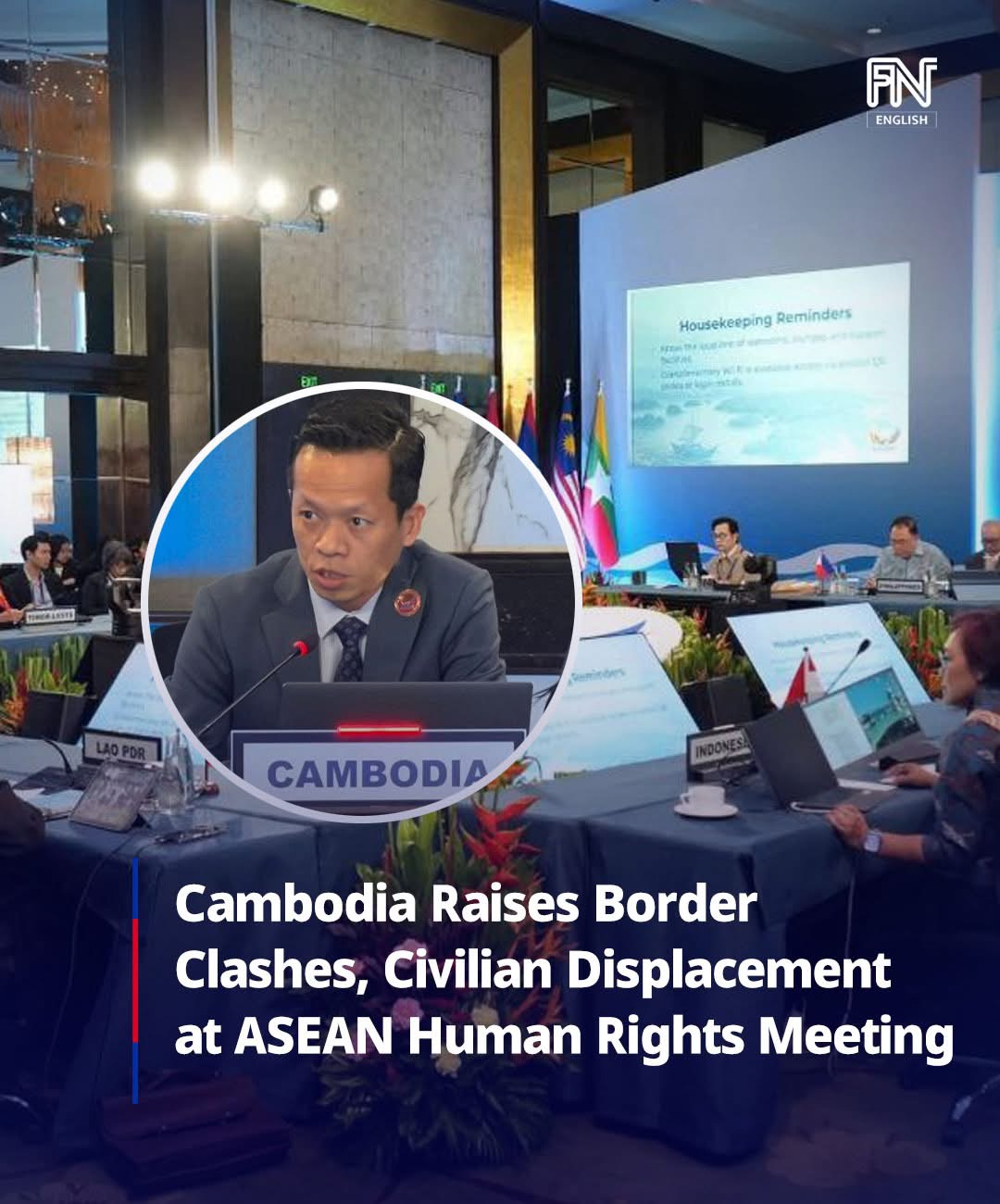
According to a press release, Seang Chinda highlighted that during the second wave of clashes from 7 to 27 December 2025, Thai forces employed disproportionate and indiscriminate weaponry, including air strikes inside Cambodian territory. He stated that the 21-day period resulted in civilian casualties, injuries, and the displacement of more than 649,000 people, as well as extensive damage to homes, public infrastructure, and cultural heritage sites, including the Preah Vihear Temple, a UNESCO World Heritage Site.
He further noted that two months after the ceasefire agreement of 27 December 2025, which guarantees the safe and dignified return of displaced persons, more than 50,000 individuals, primarily women and children, remain unable to return home. Among the reported obstacles are destroyed residences, continued unlawful occupation of Cambodian territory, installation of containers and barbed wire, and the risks posed by cluster munition remnants and unexploded ordnance.
Seang Chinda stressed that the situation contradicts the objectives of regional and international human rights frameworks aimed at ensuring dignity, safety, and security for civilians. He reaffirmed that the Royal Government of Cambodiaremains committed to resolving disputes peacefully and in accordance with international law.
On the issue of online scam crimes, he reiterated the government’s firm position that Cambodia is not a safe haven for cybercriminal activity. He reported ongoing enforcement operations, prosecutions under applicable laws, and the deportation of thousands of foreign nationals involved in such offenses.
Cambodia, he added, continues to cooperate closely with regional and international partners to combat cyber scams, while drafting strengthened legal instruments to enhance enforcement effectiveness and impose stricter penalties aimed at eradicating these crimes.
