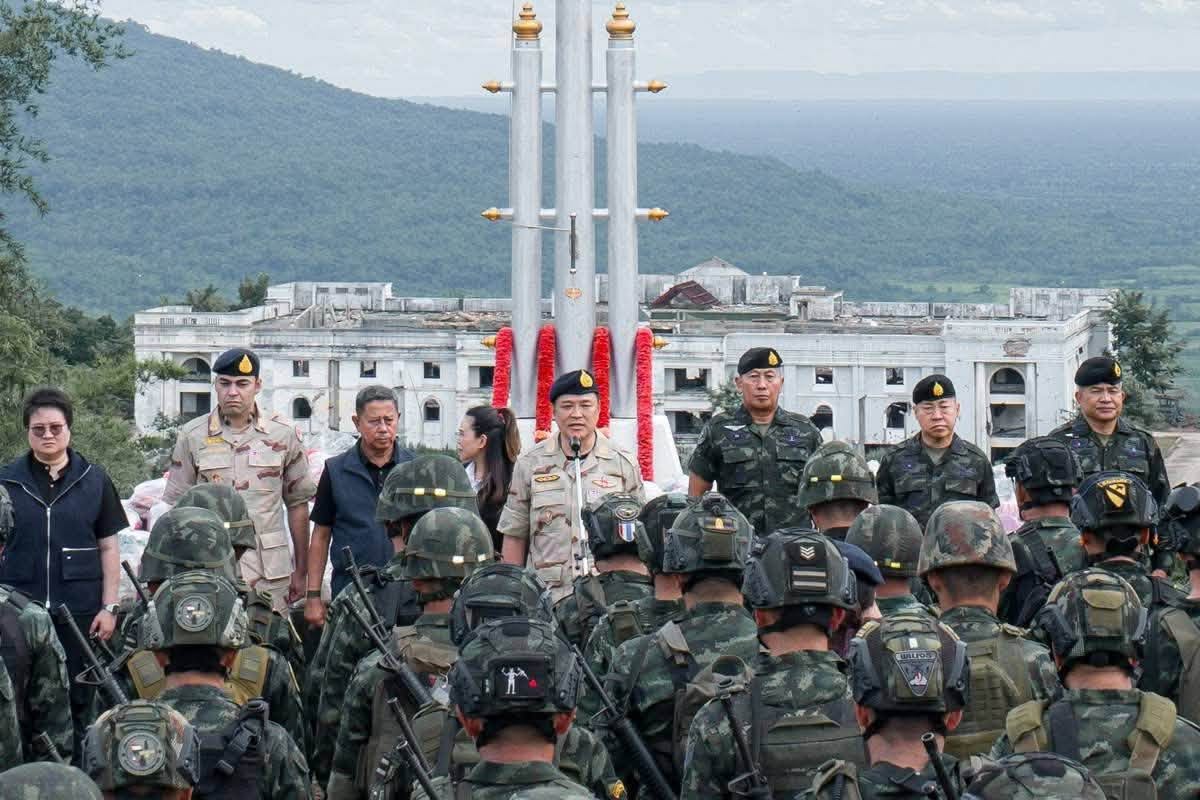



Cambodia Protests Thai PM’s Unauthorized Visit to An Ses Border Area
PHNOM PENH, August 26, 2026 – The Royal Government of Cambodia, through the Ministry of Foreign Affairs and International Cooperation, has issued a strong formal protest against Thai Prime Minister Anutin Charnvirakul’s unauthorized visit to the An Ses area on August 23.
In a press statement released on August 25, the ministry condemned the visit as a deliberate attempt to unlawfully assert claims over Cambodian sovereign territory, which has been illegally occupied by Thai armed forces since last year. The government emphasized that no legal rights can arise from such unlawful acts, and the visit cannot legitimize Thailand’s illegal occupation of Cambodian territory.
The ministry described the visit as a serious violation of Cambodia’s territorial integrity, as defined and delimited by the 1:200,000-scale maps produced by the Franco-Siamese Boundary Commission and Point 1 of the Joint Statement of the 3rd Special Meeting of the General Border Committee (GBC) on December 27, 2025, which explicitly prohibits provocative actions that could increase border tensions.
Cambodia reiterated that neither unilateral maps nor any visit based on such maps can alter the internationally recognized boundary line. The government also reaffirmed that it does not recognize any unilateral boundary line or territorial claim asserted by Thailand, and that the visit does not affect Cambodia’s legal rights or position regarding its international border.
Cambodia demanded that Thailand cease such activities in the areas mentioned, as well as in other areas illegally occupied by Thai armed forces since 2008, in order to reduce tensions, foster mutual trust, facilitate the peaceful settlement of border disputes, and restore peace, stability, and good neighborly relations along the Cambodia-Thailand border.
Cambodia remains committed to resolving all border disputes with Thailand, as with all its neighbors, exclusively through peaceful means, in line with international law and existing bilateral agreements, while firmly upholding its principled position that borderlines must not be changed by force.
— Source: Ministry of Foreign Affairs and International Cooperation