



De-Dollarization Back on the Agenda as Cambodia Promotes Riel Use
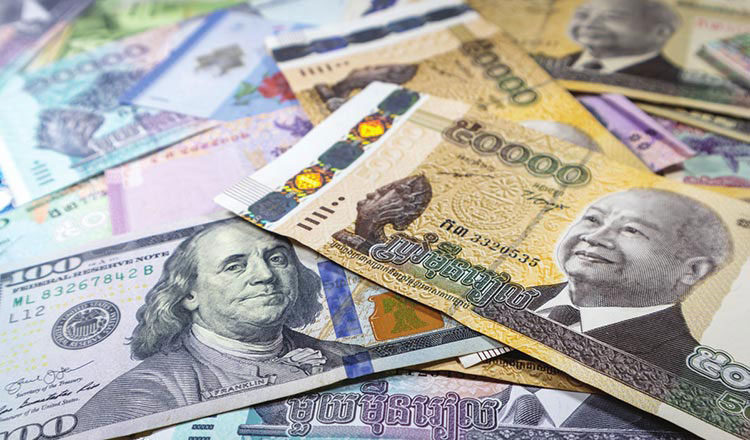
PHNOM PENH — Cambodia is taking another careful step toward reclaiming control over its own currency, with policymakers and development partners urging a stronger shift back to the riel after decades of dependence on the US dollar.
The push came during the launch of a new policy brief on March 20, where the National Bank of Cambodia and the United Nations Development Programme (UNDP) examined how dollarization continues to shape wage payments in key export sectors.
In a statement released on March 30, Yim Leat, Deputy Governor of the National Bank of Cambodia, said the findings offer practical recommendations to strengthen the riel’s role—not just as a symbol of national identity, but as a tool for maintaining macroeconomic stability and supporting long-term growth.
UNDP Resident Representative Enrico Gaveglia pointed out that Cambodia’s heavy reliance on the US dollar has deep roots. Large inflows of foreign aid in the 1990s helped entrench dollar use across the economy.
But today, he said, the country is in a position to gradually shift back—starting with greater use of the riel in development programmes themselves.
The private sector representatives have voiced their support for the initiative, stressing the need for a gradual implementation of the transition.
Speaking at the event, Rath Sophoan, chairman of the Association of Banks in Cambodia (ABC), said salary payments in Khmer riel began in 2026.
“This year, we aim to ensure that at least 25 percent of employees in the banking sector receive their salaries in riel. We will continue implementing this gradually over the next three to four years to reach 100 percent of our target,” Sophoan said.
In the financial sector, Kaing Tongngy, spokesperson for the Cambodia Microfinance Association (CMA), also voiced support for promoting salary payments in Khmer riel.
“In principle, we support this measure. However, we are currently working at the technical level to determine whether salaries should be paid fully in riel or through a combination of Khmer riel and US dollars,” Tongngy said.
For Ky Sereyvath, an economic specialist at the Royal Academy of Cambodia, de-dollarization is, at its core, about something very practical: how people are paid.
Moving salaries—especially in sectors like garments—from US dollars to riel, he explained, would help build everyday confidence in the national currency and slowly reduce dependence on the dollar.
But that transition is not without risks.
Its success hinges on the central bank’s ability to keep the exchange rate stable, backed by sufficient foreign reserves.
“If the National Bank can maintain a stable exchange rate, using riel will benefit the economy,” Sereyvath said. “But if not, it could create challenges from currency fluctuations.”
There are also deeply ingrained habits to overcome. Many businesses and investors prefer operating in US dollars to avoid exchange rate uncertainty, making any shift toward the riel as much about trust as it is about policy.
Sereyvath recommends a gradual, step-by-step approach—starting with public payments such as taxes and utilities before expanding into wage payments across selected sectors. Moving too quickly, he warned, could destabilize the very exchange rate the policy aims to protect.
Still, the long-term payoff could be significant. Greater use of the riel would give Cambodian authorities more control over the money supply and strengthen their ability to respond to external shocks tied to fluctuations in the US dollar.
Cambodia remains one of the most dollarized economies in the world—a legacy of the UNTAC era and years of instability that eroded trust in the local currency.
But change is slowly taking hold. The National Bank of Cambodia has been nudging that shift through measures like limiting small US dollar notes and encouraging riel use in everyday transactions.
The result is a quiet but noticeable transition: the riel is becoming more common in daily life, even as the US dollar continues to dominate larger business dealings.
Source: https://cambodianess.com/article/de-dollarization-back-on-the-agenda-as-cambodia-promotes-riel-use
