


Five People Die on Cambodia’s Roads Every Day. Teaching Children to Ride Safely Could Help Change That
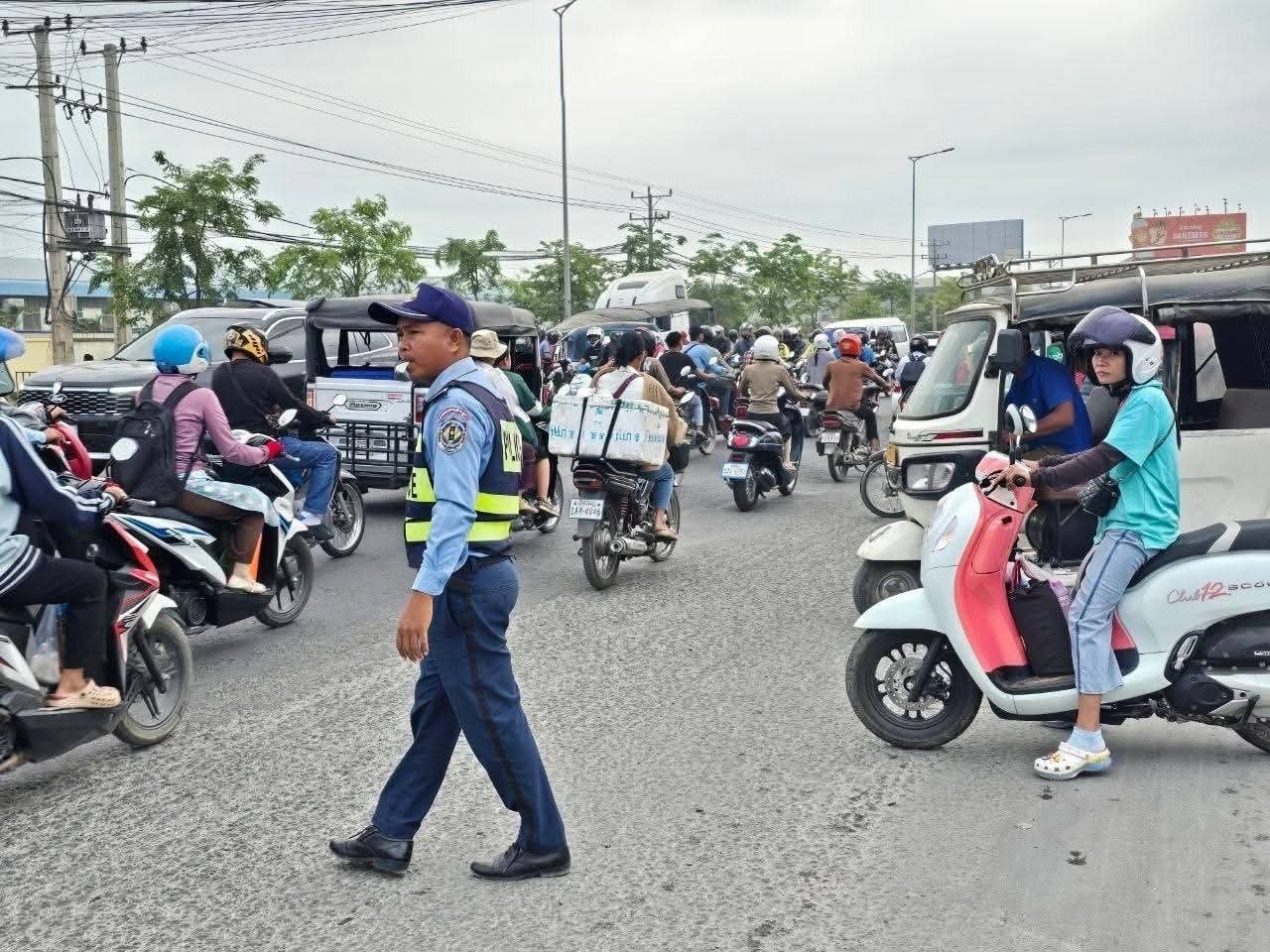
Road safety campaigns, traffic fines and licensing requirements have their place. But Cambodia is missing something fundamental in its efforts to reduce road deaths: teaching young people how to ride a motorcycle safely before they take to the roads.
Road crashes are the leading cause of death among young people aged 15–29 in Cambodia and the second-leading cause of death among children aged 10–14. In 2023 alone, 1,590 people died in road crashes, an average of five every day, while more than 4,500 were injured. Of those killed, 357, or 22 per cent, were under the age of 19. Motorcyclists accounted for the overwhelming majority of these deaths.
These are not simply statistics. They represent children, students, young workers and family members whose lives have been cut short, often in circumstances that could have been prevented.
Motorcycles dominate Cambodia’s roads and its road death toll. Motorbikes account for 85 percent of all vehicles in the country. In the first nine months of 2025, 831 motorcyclists died, representing 78 per cent of all traffic fatalities. Of those killed, 61 percent were not wearing helmets.
Young people are particularly vulnerable. Some 51 per cent of traffic fatalities involve people aged 5–29. Students accounted for 12 per cent of all road deaths in 2022, with nearly 60 per cent of these student fatalities involving secondary and high school students. Young people aged 15–24 also account for 40 per cent of motorcycle casualties.
Cambodia cannot afford to treat this as just another traffic enforcement problem.
The economic consequences are enormous, too. Road crashes cost the country about $466.8 million annually, or 1.7 percent of GDP. That is money lost to preventable deaths, injuries and damage — resources that could otherwise support schools, hospitals and essential infrastructure.
Yet much of the discussion about road safety still focuses on licensing, fines, helmets, and enforcement. These measures matter, but they miss one of the most basic problems: many young people learn to ride motorcycles without ever getting proper practical instruction.
A License Does Not Make Someone a Safe Rider
A license does not make someone a competent rider. Training does.
A license is a piece of paper. Road rules are written instructions. Neither teaches a young rider how to perform an emergency stop, maintain control on a slippery road, or respond when a vehicle suddenly cuts across their path.
A young person who holds a license but has never practiced emergency braking is not necessarily a safe rider. Licensing without practical training risks becoming a bureaucratic exercise. It produces a document, not necessarily the skills needed to survive on the road.
Human error is a leading cause of road crashes, while speeding among young people remains a major contributor to road deaths. Fines alone cannot correct these behaviors. They require practical skills, better judgment, road awareness and a change in attitude.
This is why Cambodia should establish a National Motorcycle Training Programme, led by experienced police motorcyclists who can teach young people the skills they need to protect themselves and others.
Police Officers Can Teach the Next Generation
The police have a practical reason to be involved. Cambodia already has experienced motorcycle officers who understand road conditions, traffic behavior and the dangers riders face every day. Some are highly skilled motorcyclists with the temperament and experience to become effective instructors.
One such officer could be appointed National Motorcycle Training Coach, responsible for developing a national training curriculum, training police instructors in Phnom Penh and the provinces, and ensuring the same standards are maintained nationwide.
The instructors would then deliver practical training locally, using designated police grounds or other secure training areas. Small, lightweight, automatic, single-gear motorcycles would be ideal for beginners. They are easier to handle, relatively inexpensive to maintain and suitable for teaching fundamental riding skills.
The training itself should be practical. Young people need to learn how to balance, start, stop, turn and maneuver a motorcycle at low speeds. They should practice emergency braking, understand stopping distances and learn how to avoid losing control on wet roads.
In Cambodia, wet-weather riding deserves particular attention. During the rainy season, roads become slippery, visibility deteriorates and flooding creates additional hazards. Young riders need to understand why braking distances increase, why painted road markings and metal covers can become dangerous, and why sudden movements can cause a motorcycle to lose traction.
They also need to learn how to observe traffic, use mirrors, check blind spots, anticipate overtaking vehicles and maintain safe distances. Classroom sessions can reinforce practical lessons on road signs, right-of-way rules, speed limits, helmet use and the dangers of drinking and riding.
Rural Children Need Training, Not Exclusion
Importantly, the training must reflect rural Cambodia’s realities. Motorcycles are not simply a convenient form of transport. For many families, they are the only affordable way to get children to school, travel to work, take produce to market, or reach medical services.
In rural communities, a motorcycle is the family car, the school bus, the market truck and sometimes the ambulance.
For a young person who cannot ride, access to education, employment and other opportunities can be severely restricted. Telling rural families that their children should not ride motorcycles is therefore neither realistic nor particularly helpful.
The question is not whether young people in these communities will eventually ride. Many already do. The question is whether they will receive proper training before they do.
There should also be no arbitrary lower age limit for children seeking safety training.
Refusing to teach a ten-year-old because of an age threshold does not necessarily stop that child from riding. It may simply mean that the child learns from an older sibling, a friend or through trial and error, without understanding the risks.
Younger children should receive age-appropriate instruction under close supervision, beginning with motorcycle familiarization, balance, controls and basic safety awareness. Practical exercises should be adapted to their physical development and ability, with no permission to ride on public roads.
The principle should be simple: teach safety early rather than wait until a child is already exposed to traffic.
Motorcycle Training Can Also Build Trust in the Police
Another important reason police should lead such a program is that it can build trust. It offers an opportunity to build something that Cambodia’s law enforcement agencies need just as much as better road safety: public trust.
When a police motorcycle specialist spends a Saturday morning teaching a twelve-year-old how to balance, brake, check behind and handle a motorcycle safely, that child begins to see the police differently.
The officer is no longer simply someone in uniform who stops motorists, issues fines or enforces traffic regulations. The officer becomes someone who has taught the child something valuable, cared about their safety, and invested time in their future.
That experience can have a lasting impact.
Young people who trust the police are more likely to approach officers when they need help, report crimes and cooperate with investigations. Parents who see police officers taking an active interest in their children’s safety are also more likely to regard them as partners in protecting their communities.
The benefits extend beyond the training ground. A young person who learns responsible riding from a police instructor can carry those lessons into adulthood and pass them on to younger siblings, friends and eventually their own children.
This is community policing in a very practical sense. It is about building relationships through service, mentorship and direct engagement rather than relying exclusively on enforcement.
Cambodia Must Invest in Safer Young Riders
Cambodia has spent years trying to improve road safety through public awareness campaigns, traffic regulations and enforcement. These efforts must continue. But they should be complemented by something that could make a lasting difference: practical motorcycle training for the next generation of riders.
The cost of doing nothing is already evident in the daily death toll on Cambodia’s roads. Five people die every day, and far too many are young people who should have had their entire lives ahead of them.
We cannot expect children to understand motorcycle dangers simply by telling them to be careful. We have to show them how to ride safely, teach them how to recognize danger and give them the confidence and skills to make better decisions.
A police officer teaching a child to ride safely may seem like a small intervention. But multiplied across Cambodia’s provinces and communities, it could become an important investment in the country’s road safety and its relationship with the next generation.
The objective should not simply be to produce more licensed riders. It should produce safer, more responsible riders—and ensure fewer young Cambodians become statistics on the country’s roads.