


No Story, No Influence: Cambodia’s Soft Power Crisis
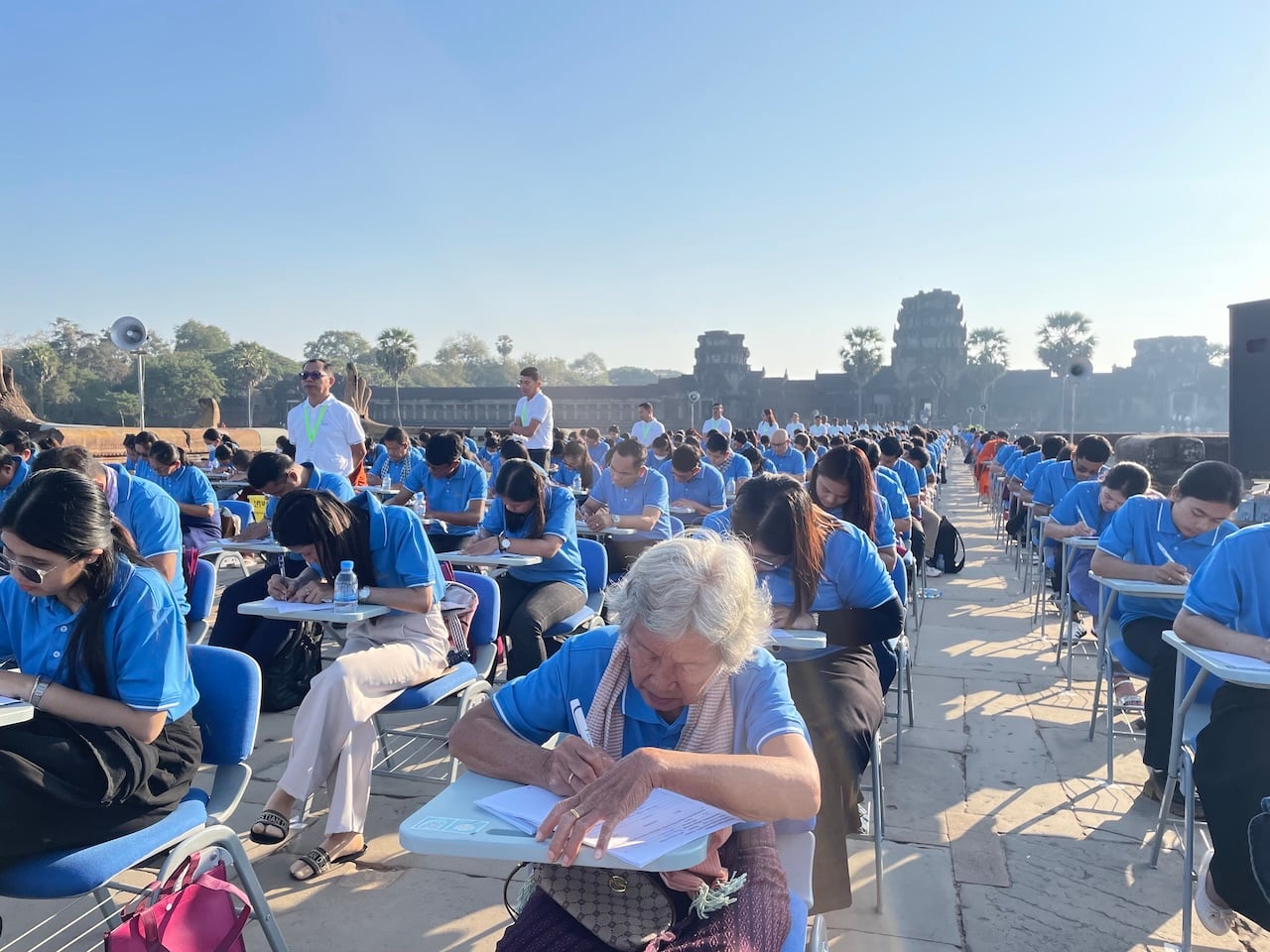
Few countries carry a legacy as breathtaking as Cambodia’s. Angkor Wat crowns our national flag and stands among humanity’s greatest architectural achievements. Yet when people picture Southeast Asia today, the images that surface rarely come from Cambodia.
Why?
Because for all the grandeur of our past, Cambodia’s cultural voice in the present remains faint. We were reminded of the cost of that absence during the recent border tensions with Thailand. What unfolded was not only a dispute over territory or diplomacy, but a contest of narratives—one in which Cambodia struggled to be heard.
The political scientist Joseph Nye described “soft power” as a country’s ability to shape outcomes through attraction rather than coercion. It rests on culture, political values, and foreign policy. Unlike hard power—measured in armies and economic strength—soft power works quietly, drawing others in, shaping perceptions, and framing how stories are told.
This distinction matters. Countries with strong cultural visibility often set the tone of global conversations. When audiences already recognize a nation’s films, music, literature, or media, its perspective travels farther and faster. When that familiarity is absent, its voice struggles to cross borders, easily overshadowed by louder, more recognizable narratives.
Cambodia does not have overwhelming hard power to compensate for this gap. Its military and economic capacity remain modest compared to regional peers like Thailand. With a relatively small defense budget and a GDP per capita among the lowest in Southeast Asia, Cambodia is not positioned to dominate through force or wealth.
That reality makes the country’s limited investment in soft power all the more striking. When hard power is constrained, cultural influence is not optional—it is strategic. Yet Cambodia has only begun to cultivate the kind of cultural presence that could amplify its voice globally.
And this is not a problem of scarcity. Cambodia possesses one of the richest cultural legacies in the region: classical dance, temple architecture, silk weaving, wood carving, and dishes like fish amok. These are not just artifacts of the past; they are reservoirs of meaning, identity, and storytelling potential. Yet they rarely circulate widely enough to shape global imagination in the way other Asian cultures have managed to do.
There have been recent efforts. In 2024, the Ministry of Tourism launched a new marketing board to promote Cambodia abroad. More recently, Prime Minister Hun Manet called for stronger international promotion of the country’s cultural and tourism assets. These are important signals. But soft power cannot be built through branding alone. It cannot be reduced to slogans or campaigns.
When Creativity Is Undervalued
At its core, Cambodia’s soft-power deficit is an educational and cultural issue.
Across much of the country, prestige is still tied to fields like medicine, engineering, finance, and technology. These are essential for development, but they do not create cultural presence. The industries that shape how a country is seen—film, literature, music, design, scholarship—remain undervalued.
Soft power is not manufactured in advertising offices. It grows out of a society’s creative life. Writers, filmmakers, musicians, historians, and artists translate a nation’s identity into stories that travel. Without them, even the richest heritage can fall silent.
In Cambodia, pursuing these paths is often seen as impractical. Students who choose the humanities face subtle pressure to shift toward more “secure” careers. Over time, this creates a hierarchy: STEM fields are respected and stable, while the arts are treated as indulgent.
I encountered this mindset firsthand when I moved to the United States to study English Literature and Creative Writing. The reaction back home was often confusion: “You already speak English. Why go abroad just to study it?”
But literature is not language training. It is the study of how societies understand themselves—through stories, ideas, and imagination. It teaches how narratives are constructed, how meaning is shaped, and how culture travels.
Being in the United States also revealed something larger. The country’s global influence does not come only from its economy or military, but from its cultural industries—Hollywood films, globally recognized musicians like Taylor Swift, and widely read literature. These are not just products; they are vehicles of identity, shaping how the world sees America.
Cambodia risks sidelining itself by undervaluing the very fields that produce this kind of influence. Without a strong creative ecosystem, cultural heritage remains static—admired, but not reimagined or exported.
In today’s world, culture does not spread through museums alone. It moves through films, television, music, literature, games, and digital storytelling. Traditions survive by evolving—by being retold, reinterpreted, and woven into contemporary narratives.
Consider South Korea. The global rise of Korean food was not driven primarily by policy, but by storytelling. Dishes like kimchi and Korean barbecue appeared naturally in television dramas, embedded in scenes of family, friendship, and everyday life. Audiences did not just see the food—they felt its meaning.
Japan offers a similar lesson. Ramen, bento boxes, and onigiri became globally familiar not through campaigns, but through anime and manga. Characters eating, celebrating, or grieving over food made these cultural elements emotionally resonant. Video games extended that reach, embedding Japanese aesthetics and traditions into interactive worlds.
These countries did not simply preserve culture—they translated it.
When Noise Replaces Storytelling
So what does Cambodia show the world today?
Not long ago, I visited a school in Kampong Speu and asked students what they enjoyed watching. One answer stood out: “I like watching Peypey Dy argue on Facebook.”
It was a revealing moment. Peypey Dy rose to fame in the early 2010s largely through profanity-laden arguments and online feuds with other content creators.
That style of spectacle—viral outrage packaged as entertainment—has become one of the more visible forms of media consumption among Cambodian youth, and it represents one of the lowest forms of cultural production. I cannot help but wonder, somewhat uneasily, whether this is the image of Cambodian media that reaches the outside world.
While not unique to Cambodia, it reflects a deeper issue: the absence of a strong alternative ecosystem producing meaningful, exportable cultural content.
This is not simply a matter of taste. It is structural.
Cambodia lacks the infrastructure to consistently produce and distribute high-quality storytelling. There are few film studios capable of reaching international audiences, limited publishing systems for translating Khmer literature, and minimal pathways for creators to bring Cambodian narratives to the world.
Given these constraints, it is understandable that parents worry about careers in the arts. The pathways are uncertain because the ecosystem itself is still fragile.
And yet, Cambodia was not always like this.
In the 1950s and 1960s, the country experienced a vibrant cultural renaissance. Its film industry produced hundreds of movies, blending tradition with modern storytelling. Music, cinema, and visual arts flourished, creating a dynamic cultural scene.
That world was nearly erased during the Khmer Rouge era, when artists and intellectuals were systematically targeted. The damage was not only human—it was cultural. Entire creative lineages were broken.
Today’s Cambodia is still rebuilding from that rupture. Understanding the problem is one thing. Solving it is another.
Joseph Nye himself warned that governments cannot manufacture cultural appeal by decree. When states try too hard to engineer culture, it often feels like propaganda rather than something authentic and compelling.
China offers a useful contrast. Despite its immense economic and geopolitical power, its cultural influence in many Western societies remains limited compared to countries like South Korea or Japan. Strict censorship and heavy oversight have constrained creative expression, narrowing the stories that can travel freely.
Cambodia should take note. The goal is not to control culture, but to enable it.
That means investing in film schools and art academies, funding translation programs to bring Khmer literature into global circulation, and expanding scholarships in the humanities. It means creating spaces where filmmakers, writers, and artists can experiment and collaborate. International film festivals, partnerships with streaming platforms, and openness to foreign investment in cultural industries could help Cambodian stories reach wider audiences.
Equally important is intellectual freedom. Creativity thrives where people feel safe to explore ideas, challenge norms, and tell stories honestly. Without that freedom, cultural production remains constrained, and its global resonance limited.
The Power of What We Create
But policy alone is not enough. What Cambodia needs is a shift in mindset.
The humanities must be seen not as luxuries, but as pillars of national identity and influence. Universities should encourage students to pursue literature, history, film, and cultural studies with seriousness and pride. Society must begin to value those who interpret and express Cambodia’s identity—not just those who build its infrastructure or manage its economy.
Culture is not decoration. It is power.
The novelist especially-for-young-people-with-energy”>Chuck Palahniuk once wrote that controlling culture means shaping the kind of world you want to live in—through books, music, films, and art. His words capture something essential: nations are remembered not only for what they build, but for the stories they tell.
Cambodia once told its story in stone. The temples of Angkor are not just monuments; they are expressions of imagination, cosmology, and ambition carved into the landscape.
The challenge now is to tell that story again—this time through film, literature, music, and digital media. Because in an age defined by narrative, the countries that shape the global imagination are the ones that endure in it.
