



Picture of Dead Birds That Won a Prize, and the Silent Crisis It Exposes
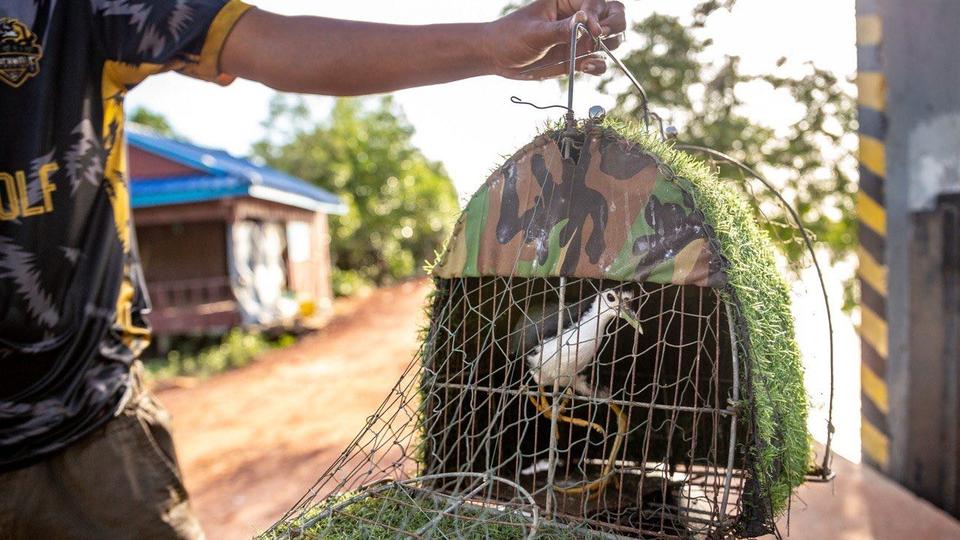
Photographer Yann Bigant’s bloodied image of chopped-up yellow bitterns in a Cambodian wet market won Bird Photographer of the Year, but its real power lies in what it reveals: a vast, under-the-radar hunting trade quietly emptying the Kingdom’s wetlands and rice fields of common and rare birds without mercy
A bloodied picture of chopped up yellow bitterns in a wet market—entrails, meat and beaked heads—bagged Yann Bigant the Bird Photographer of the Year 2026 award, but it is not so much a celebration given the macabre story it tells of the state of bird population in Cambodia where illegal hunting has nearly decimated some rare species.
Yellow bitterns, a popular water bird species, are considered common, so they are hunted in “very large numbers” throughout Southeast Asia with their numbers likely to fall in time. Unfortunately, that will only be noticeable once the population has crashed, said Phnom Penh-based photojournalist Bigant.
“This is what happened to a small bird called the Yellow-breasted bunting that was super common, said to fly above rice by [the] thousands in the past, but was driven to near extinction by hunting in just 30-40 years.
“We know about this one because it became critically endangered 10 years ago. So endangered species are basically the ‘canary in the coal mine’ for other bird species, most of which are actually in decline,” said Bigant, a bird conservationist.
His photograph of the yellow bitterns was among a wall of bird pictures, which made the list of the Bird Photographer of the Year award in the UK—the world’s leading bird photography competition.
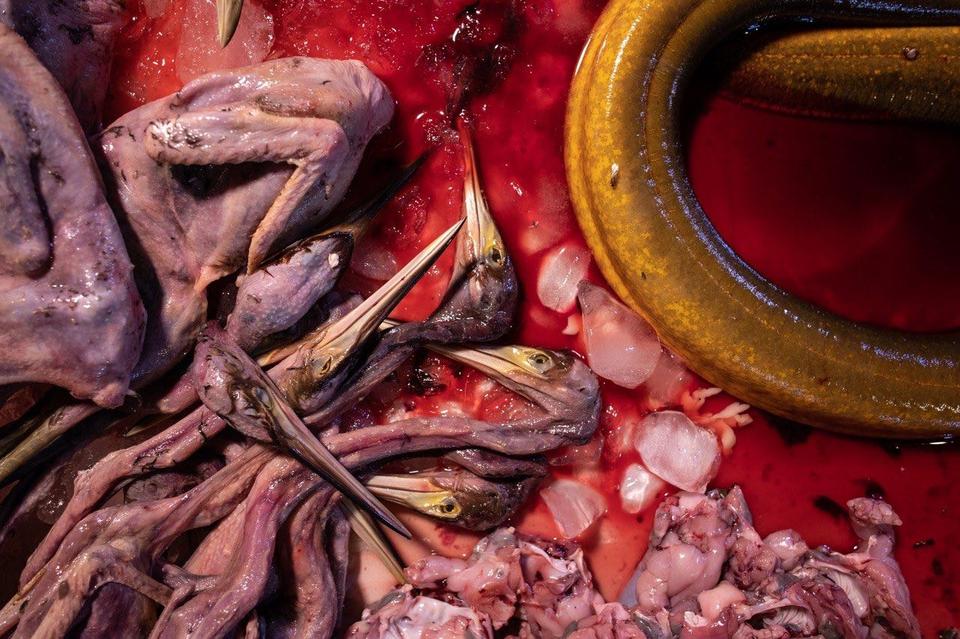
Titled “Birds in the red”, the picture won the silver medal under the conservation category and was published by The Guardian newspaper in the UK. Bigant also won Spain’s Delta Birding Festival, one of Europe’s key birdwatching gatherings.
His submission, inspired after an earlier photograph of trapped waterhen that was sent to the same UK competition last year, aimed to highlight how hunting is quietly decimating populations of birds once plentiful in Cambodia’s vast expanse of rice fields and wetlands.
A conservative figure
Quoting a survey by regional partnership group, BirdLifeAsia, Bigant said “a lot of bird hunting is taking place under the radar”, with conservationists fearing that there could be “empty wetlands and farmlands” soon.
“And as Cambodia develops and the land gets transformed even more, other threats, [such as] habitat loss, agriculture intensification, pesticides, and infrastructure, plus climate change, will make the situation even worse,” he told Kiripost.
The more dire situation now is the use of “mist traps”—long thin nets stretched across rice fields— with sound speakers playing bird calls; a method most commonly employed by hunters to catch birds with minimum effort. The hunting technique also traps migratory birds, which has exposed them to huge threats.
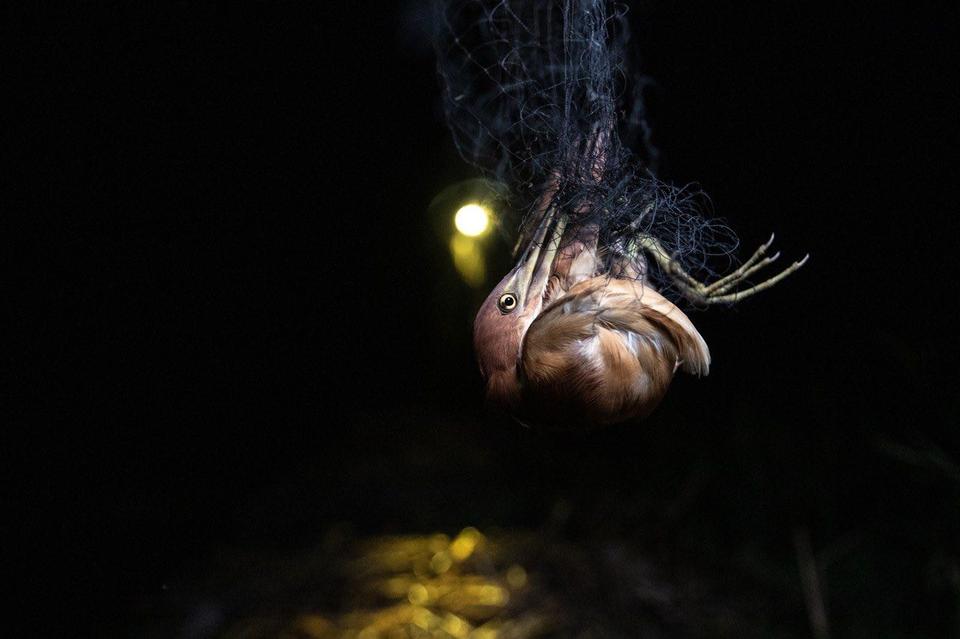
He said rare species are at risk from hunting as there are “so few individuals left” from that given species. “If a few critically endangered spoon-billed sandpipers are caught in mist nets, it’s a disaster because there are only around 400 individuals left.” However, with common species, like yellow bitterns and other species of waterbirds, he said, it works differently.
“They are common which means they are also hunted in very large numbers all over the region.”
About five years ago, a survey by bird conservation organisation NatureLife Cambodia estimated that “up to 500,000 birds are caught every year in Cambodia, only from the top 10 most hunted species”, Bigant said, noting that NatureLife mentioned that figure was conservative.
Low funding
He lamented that birds do not command the same level of attention as mammals, and farmland is seldom considered in wildlife protection compared to forests, despite being an important habitat for birds.
“Someone selling a muntjac or a pangolin in a forested province is much more likely to attract the attention of authorities than birds on sale in a city market or roadside stall – it’s dismissed as not important,” he said.
For instance, he cited, the owner of the stall where he shot his winning photo told him that he is not bothered by the authorities as he sells “just a few birds”, but daily sales puts the total number of birds sold at two to three dozens.
“We found this in many markets in Phnom Penh and in several provinces, so we can safely assume it’s happening all over Cambodia. And this is just what’s in the visible trade, but there is also a lot of domestic consumption and local trade,” he said.
While bird hunting for consumption or exotic pet industry is a major problem, birds caught for “merit release” is another big concern as some three million are captured, with many ending up dying before it is “released” by people in a religious act of atonement or collecting karmic points through positive deeds.
But, addressing the entire issue of conservation and protection is challenging given tight funds, so species at risk of immediate extinction are “obviously their priority”, he said. Environmental and wildlife authorities also only focus on species once they have become rare.
“But we should look at birds as a whole group, and recognise that hunting is a threat to bird populations in general,” he added.
Merit release
Bigant, a conservationist with over 10 years experience, has been in Cambodia since 2021 after living in China. He began work as freelance photojournalist around 2022 to highlight underreported wildlife trade issues and has contributed to publications such as Dialogue Earth, Mongabay and South China Morning Post.
His love for nature turned into a career in conservation and, later, freelance photography and storytelling to help NGOs shine a light on underreported threats to wildlife and the tireless, underfunded people working to protect it, because stories and images would connect with people more than reports and papers.
“At the same time I started to spend time watching birds and realised that even what we have just around us is incredible. I used to register ‘birds’ as a general component of nature, but once you take the time to actually look for them, it becomes personal. It’s a way to reconnect with nature and birds are a good introduction to wildlife because they are much more accessible,” he said.
Bigant cited places, such as Wat Phnom, the wetlands around Phnom Penh and Siem Reap, in Arey Ksat and in the temples of Angkor, as having dozens of different species, some coming every year all the way from the far north. “We just need to take the time to watch.”
He was also triggered by issues impacting birds in the country which often go unnoticed, although the general consensus is to protect wildlife yet behaviours show opposite acts, like the case of merit release.
“It’s actually very bad for birds but people feel they are doing a good thing, and authorities and monasteries don’t really want to speak against it. Birds are caught in traps and nets, transported on motorbikes in crowded cages, exhausted by noise and heat, and handled several times. Many die before and even after release.”
“So, photos can bring people closer to what’s happening. It’s a useful tool to help us see animals not just as ‘animated things’ but as individuals,” he added.
More views, more payment
He was surprised that his yellow bittern picture bagged two awards as he felt it was “a bit too straightforward”, appreciating the fact that the judges did not shy away from an image of blood and gore.
Noting that it is “nice” to get recognition for a photo, particularly in Bird Photographer of the Year featuring the work of many talented and dedicated photographers, Bigant said it is another channel to increase visibility of conservation issues.
“It’s [also] a nice recognition on a personal level because it’s not easy work. A project can take hundreds of hours, very little pay in regards to the time spent on it, a lot of painful feelings to see wildlife killed or on sale day after day. So getting an image widely seen is a definite win,” he remarked.
Meanwhile, he said the image was not published by several media which “echoes an interesting paradox” — while collectively people do not want to see graphic images in spite of the potential it presents to change the current situation, “this kind of content is trending on Facebook”.
“[It’s] where hunters and traders make money from hunting video and captive wildlife content […] by selling the animals themselves and through the platform monetisation program; more views equals more payments,” he added.
Bigant has participated in various competitions, with the yellow bittern image being part of a series of mist net hunting in Cambodia that was a finalist in the Delta Birding Festival contest last week.
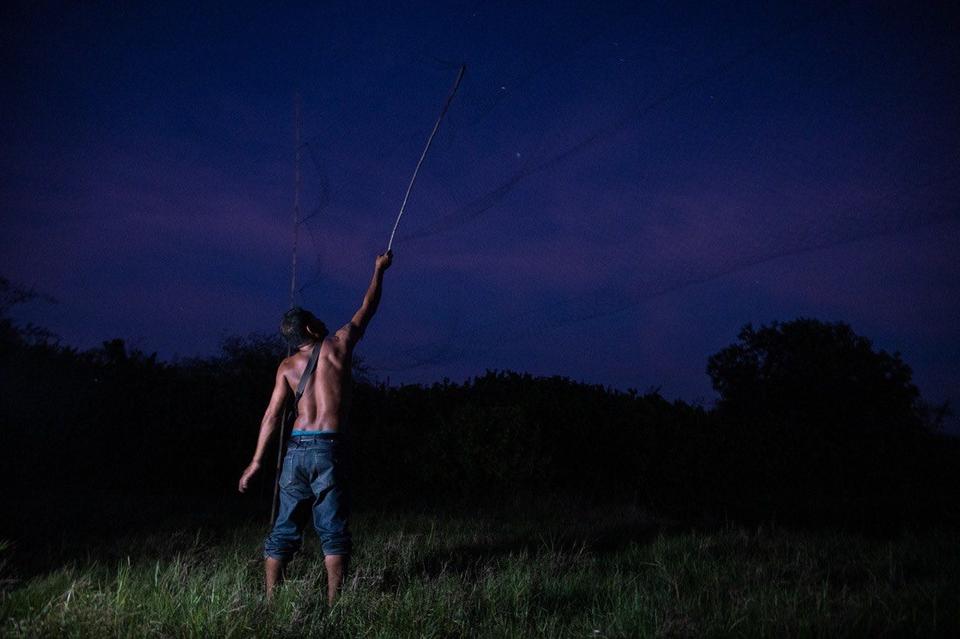
His trapped waterhen photograph for the Bird Photographer of the Year taken near Sihanoukville two years ago received commendation.
“Interestingly, it was this encounter that made me realise hunting was happening everywhere in plain sight and set me to work on several related stories,” he said.
Source: https://kiripost.com/stories/a-picture-of-dead-birds-that-won-a-prize-and-the-silent-crisis-it-exposes