


Looted Gods Return Home – Gold Treasures
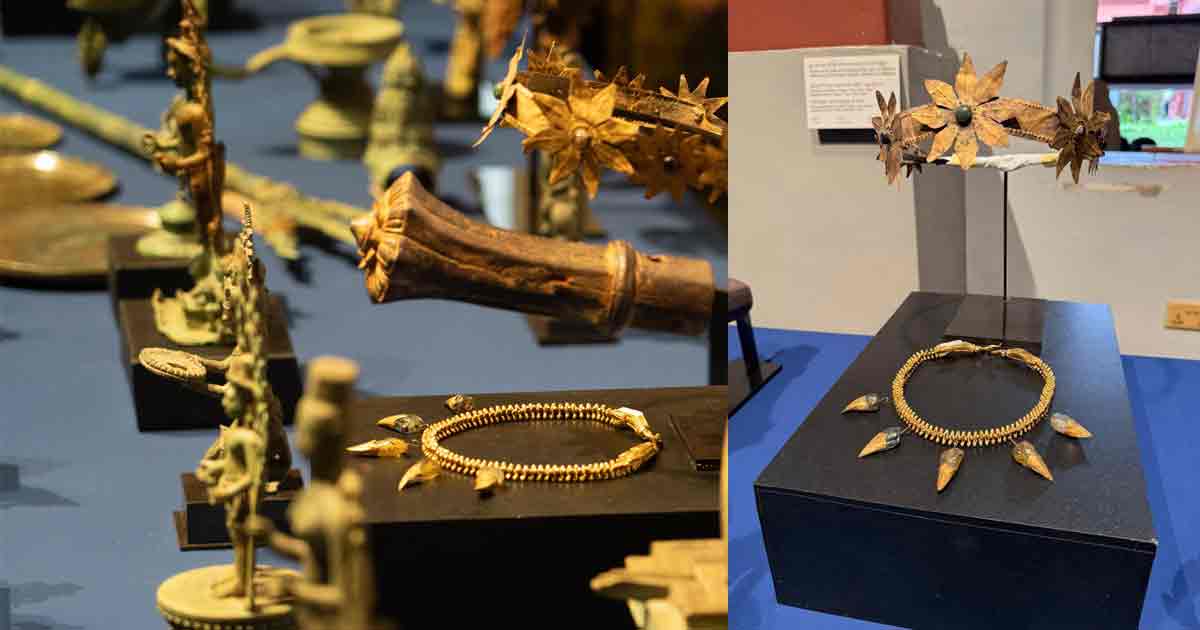
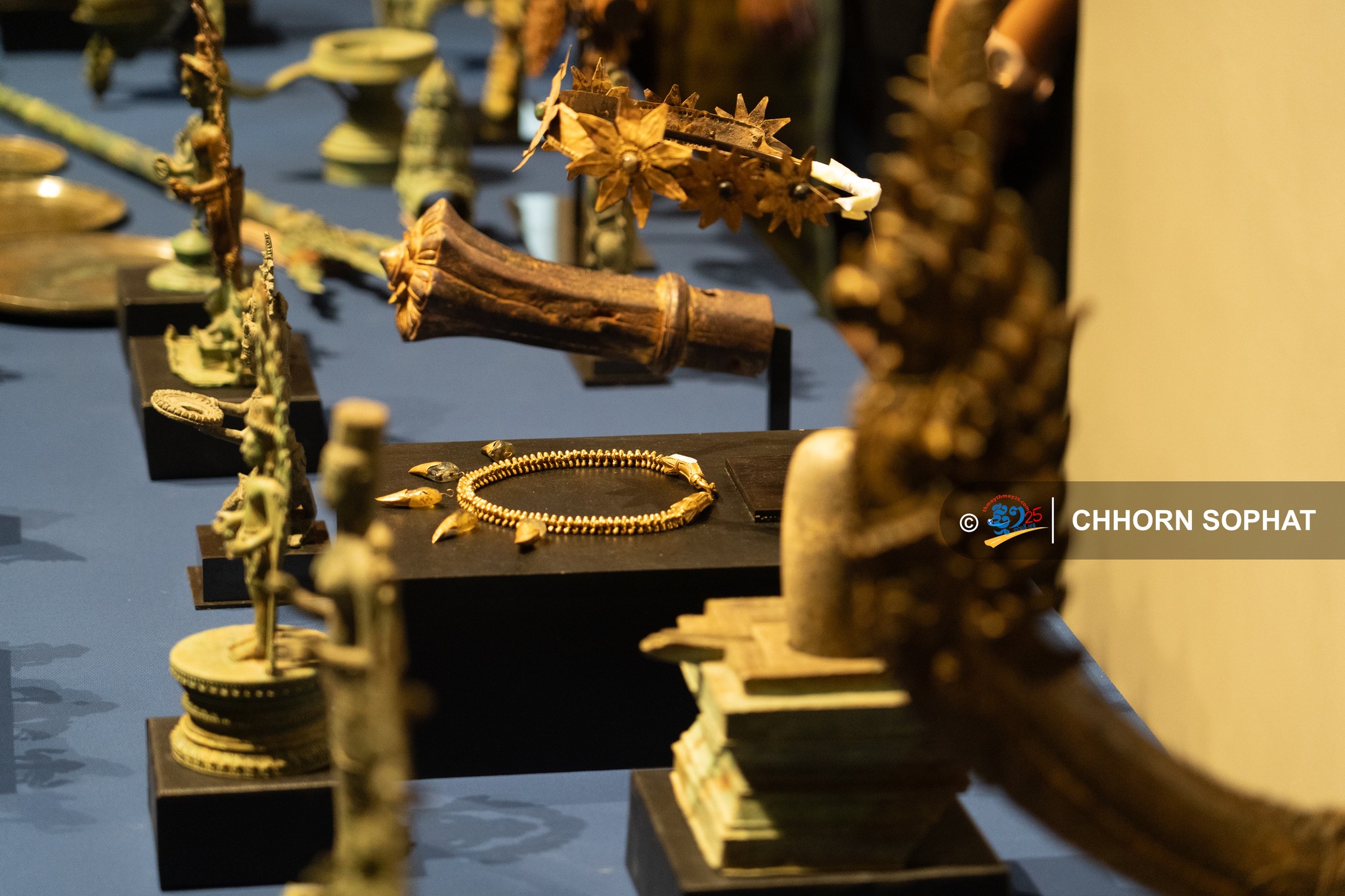
These gold treasures used to belong to Douglas Latchford who had a particular penchant for collecting ancient Khmer gold. He even co-authored a book all about it with Emma Bunker, publishing the glossy coffee-table book, Khmer Gold: Gifts for the Gods, in 2008. He was addicted, like many before him, to the seemingly few precious remnants of the gold that had survived from the era of the Khmer Empire into modern times. For the Khmer, gold was associated with the sun and symbolized power, prestige and wealth. The Khmer elite proudly wore gold as a reflection of beauty and their success. They decorated themselves in gold jewelry, they enhanced their sacred images with gold ornaments and even embellished their architecture with gold fixtures as well. Khmer inscriptions make frequent reference to gold images, cult utensils, palanquin fittings, parasol handles, weapons, jewelry and other ceremonial paraphernalia that were associated with royalty or were presented as meritorious gifts to religious establishments or important individuals. The popularity of gold is also the reason for its rarity, with gold items high on the wish-list of looters, who would go to any length to search for it, even if it meant destroying sacred statues and the temples themselves. The first of this trio of gold treasures, a pre-Angkor floral diadem, was one such object that Latchford bragged about when promoting both his Khmer Gold book, as well as including it in his first publication on Khmer arts, Adoration and Glory in 2004. Latchford, a British art collector-cum-dealer with homes in London and Bangkok, made a grand gesture in early 2008 by donating two sets of gold royal regalia to the Cambodian government. After his death in August 2020, a few statues from his extensive private collection were returned from the Latchford family in September 2021, with an additional 77 pieces of gold and gem-encrusted jewelry ceremoniously handed over to the Cambodian Restitution team, finally arriving back home at the beginning of 2023. Why these three gold items were not included in that hoard is not known. The final delivery of the 74 antiquities including this trio, two weeks ago closes the door on the Latchford collection that was held by his family in London.
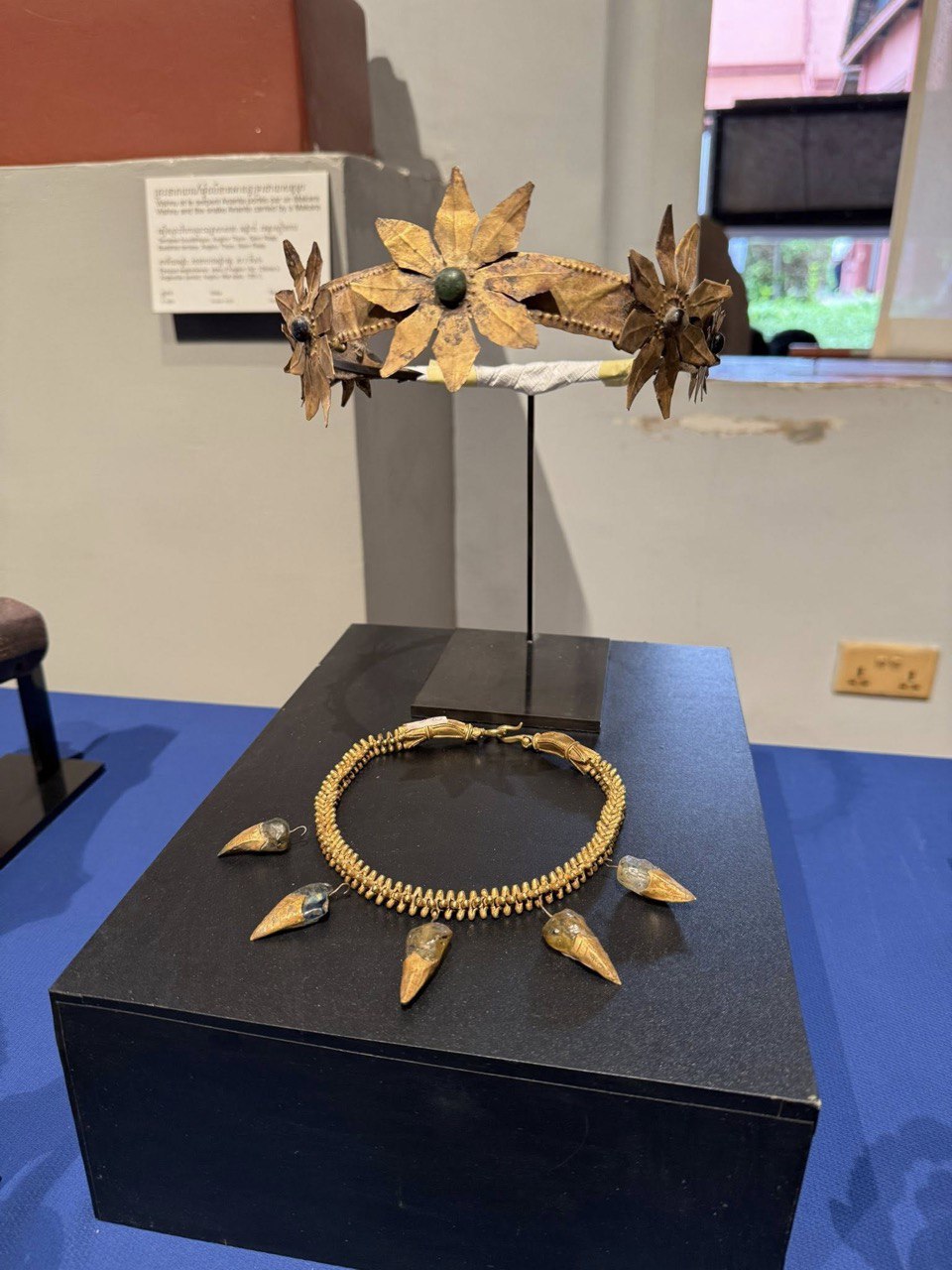
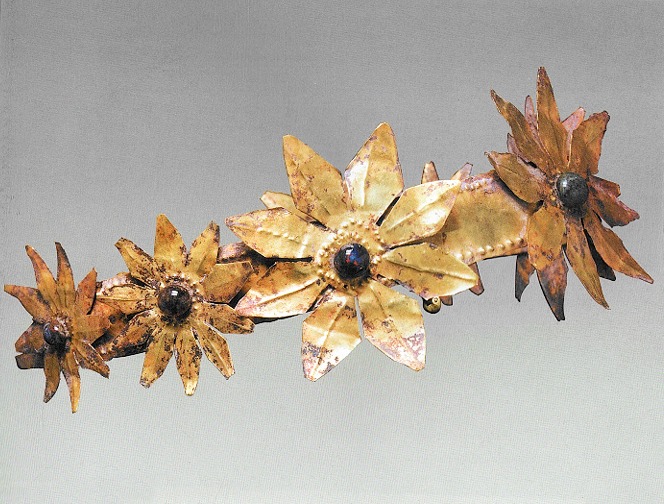
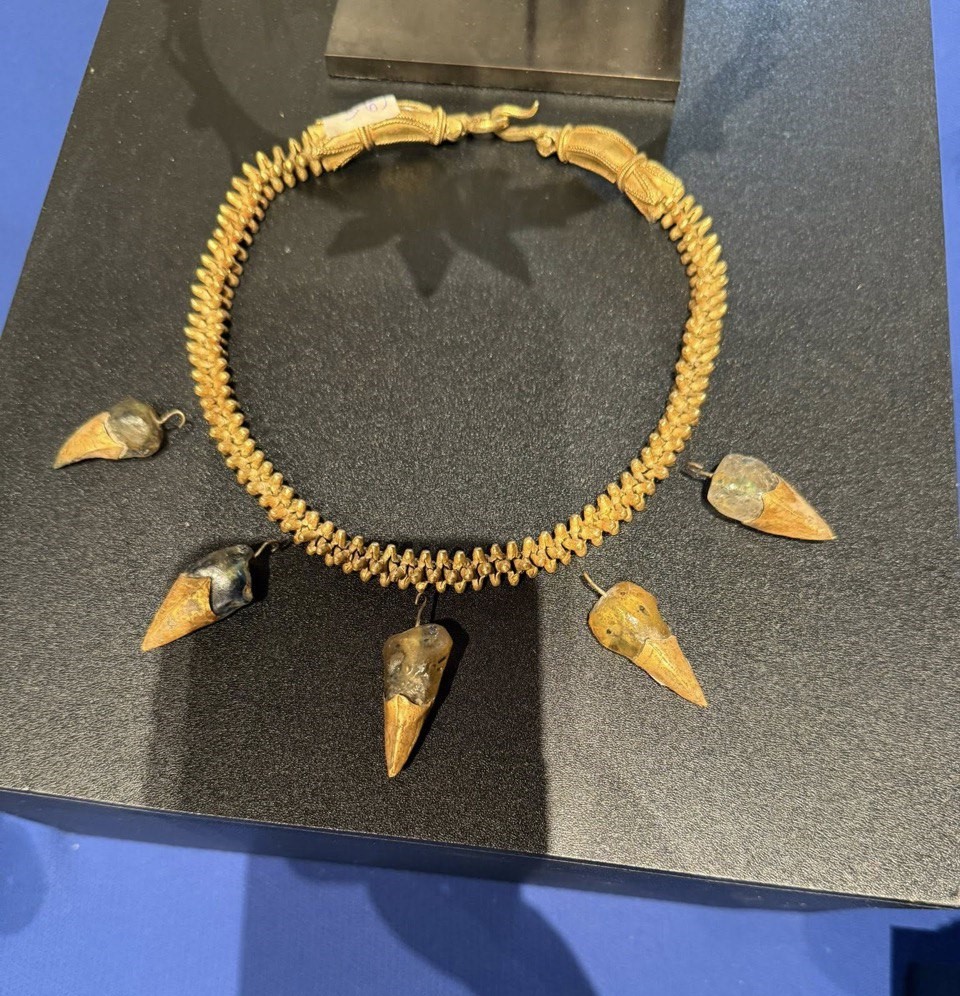
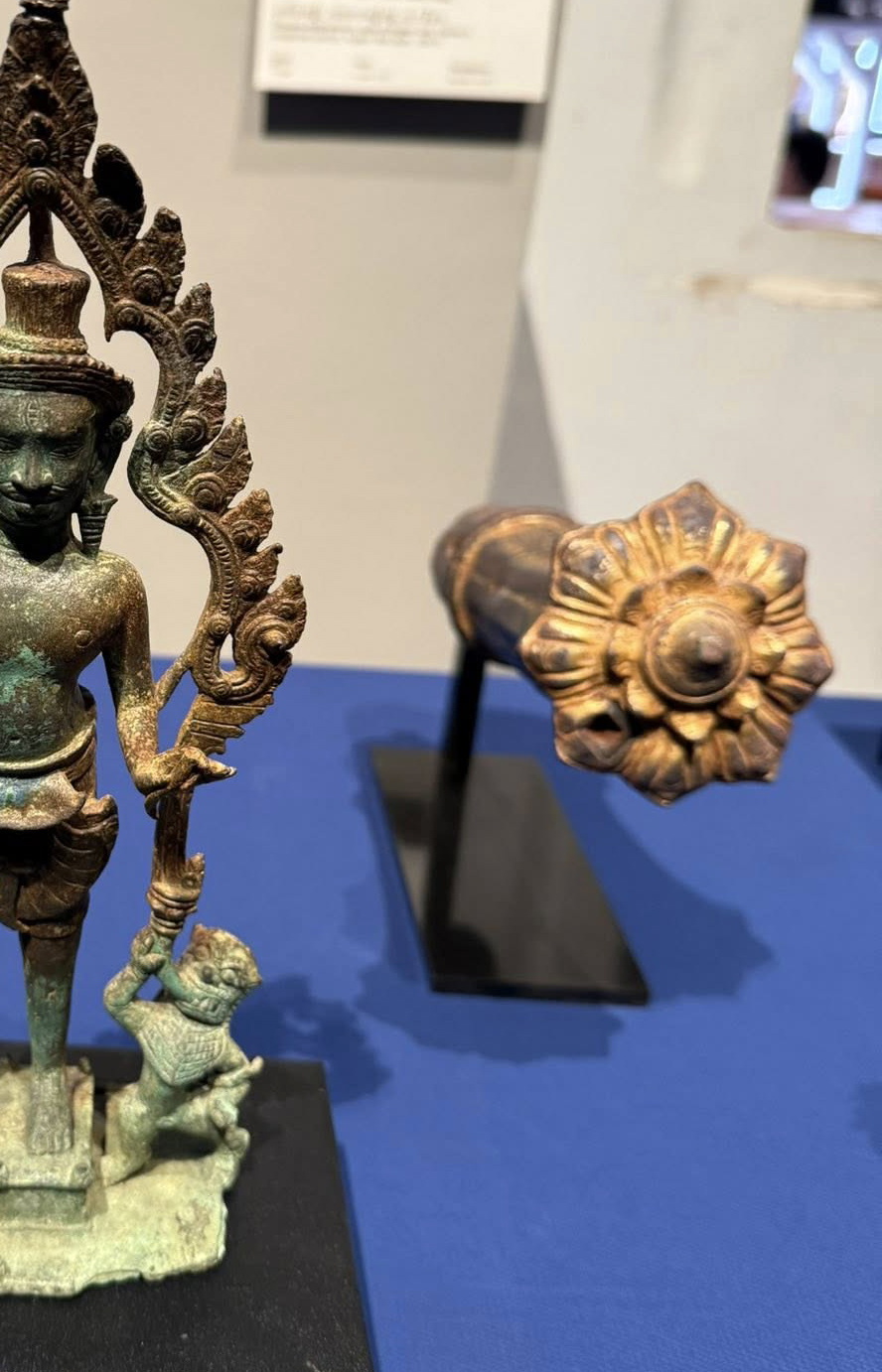
Over the course of more than fifty years, Latchford masterminded the pillage of Cambodia’s remote sacred temples and subsequent distribution of thousands of Khmer artworks in stone or bronze, around the world to museums, auction houses, galleries and private collectors. In his Adoration and Glory publication in 2004, he offered up the following text describing the pre-Angkor gold Diadem: ‘Said to have been discovered in Angkor Borei, this extraordinary gold diadem in the form of a floral wreath is an example of the artifacts associated with the nearby port of Oc-Eo and its flow of international trade. This diadem is made in the shape of a wreath decorated with calyx-leaf medallions, a typical flower design from the Hellenistic or Roman world of the Mediterranean region. Each flower was chisel-cut from gold sheet and attached to a gold circlet made of gold strips with a hooked clasp. The petals are each marked by a raised repousse line that bisects it longitudinally. Coloured glass within a circle of repousse dots adorns the center of each flower. This type of exotic adornment does not appear to have any influence on later Khmer jewelry, except for the hook-and-eye clasp that is similar to later fastening devices.’ It was dated to around the 1st to 3rd centuries AD, with a diameter of 17 centimeters, and featured in two of the Latchford/Bunker catalogues. The gold pendant necklace, dating to the 12th century, consists of a sequence of links made of sections cut from a pre-cast gold role that was formed by hammering and soldering. The hook and eye were each piece-mold cast, then set into a tubular collar at either end of the jasmine-flower imitation necklace to form a clasp. The loop is circular rather than shaped like a figure six. Slits in each collar allowed the garland to be inserted and soldered in place. The clasp was punched with decorative markings. The necklace is made of an alloy that is almost pure gold and is extremely heavy. It has five pendants attached to the necklace with a small loop, with rock crystal inserted into a V-shaped gold sleeve. The third piece is a gilded bronze Finial end piece that is decorated in the form of a blooming flower, with its open shaft end most likely attaching to fittings on a chariot or palanquin. Khmer goldsmiths practiced two distinct different methods of gilding, a mechanical method called foil gilding and a chemical technique known as amalgam gilding, often referred to as fire gilding. Foil gilding is accomplished by overlaying base metal with gold foil that is attached by wrapping, riveting or hammering with a punch, so that the foil is forced into the base metal’s surface. Amalgam gilding involves the application of mercury mixed with gold to a metal object, followed by baking and burnishing to form a decorated surface.
https://t.me/SacredandStolen