

PM Rejects Claims Social Sector Funds Will Be Diverted to the Military
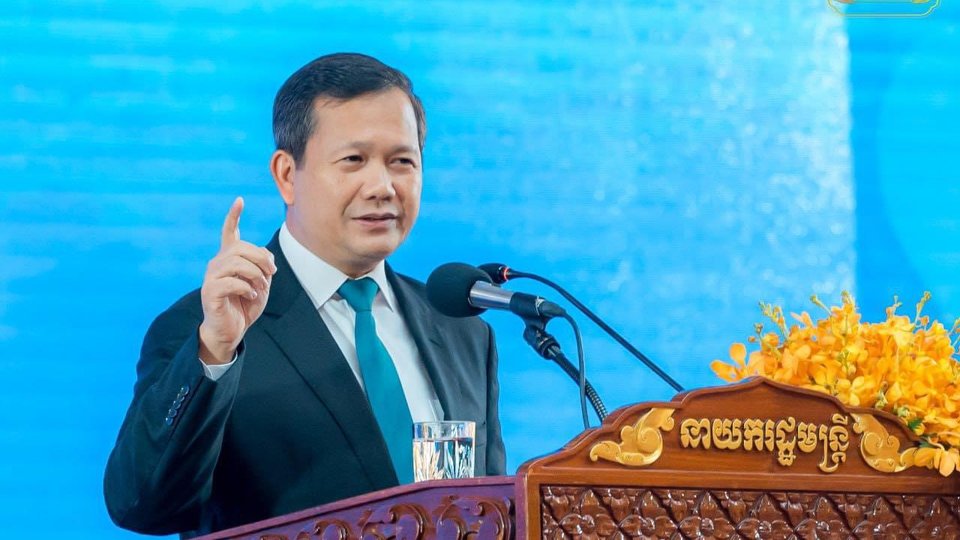
Hun Manet has rejected claims that education and health budgets will be cut to fund higher defence spending, saying both sectors will continue to receive increased funding under the government’s long-term budget plans
Prime Minister Hun Manet has dismissed claims that Cambodia will cut spending on education, health and other social services to boost defence funding, insisting that the government has sufficient resources to increase both sectors simultaneously.
Speaking at the inauguration of a new building in Phnom Penh on Tuesday, Manet said recent speculation about social sector budget cuts was unfounded, despite plans to increase spending on national defence and security.
He added that during periods when the world is not in a state of uncertainty, Cambodia must accelerate its economic and national defence efforts by continuing to invest in capital and human resources in line with national development goals.
“As the government continues to promote and support the education sector, we will continue to consider human capital development and improving the well-being of citizens as high priorities in the medium- and long-term public finance framework,” he said.
The clarification comes after the government issued a circular outlining preparations for the 2027-2029 budget strategy plan and the 2027 Finance and Management Act prompting public discussion over future spending priorities.
“There is no reduction in the budget for the education and health sectors to meet the needs of the national defence sector, even though the national defence sector must increase. Then the social sector budget continues to grow,” he said.
“In fact, in 2026, even if we break out into conflict in 2025, spending on national defence will increase, but spending on these sectors will not decrease as the government has sufficient budget for the national defence sector.”
According to Manet, social sector spending increased by an average of more than $2.6 billion between 2024 and 2026, representing annual growth of about seven percent. By comparison, spending on defence and security exceeded $1.1 billion over the same period, growing by an average of 3.3 percent.
“If we multiply spending on education, social welfare and health, the growth is one to two times greater than that of the national defence sector, so it shows that there is no decrease in the education, health and social sectors,” he confirmed.
According to the 2027-2029 Budget Strategic Plan and the Draft Law on Finance for 2027, national defence, security and public order sector allocations are predicted to represent 2.71 percent of GDP in 2027 to enhance national sovereignty, security and public safety, and to support the welfare of the armed forces while maintaining equipment and technical resources.
Manet stressed this is a primary announcement for July’s negotiations between relevant ministries. He confirmed that the 2027 national budget will be finalised in September. However, it is planned that the social sector, including education and health, will increase by 3.4 percent in 2027, 8.3 percent in 2028 and five percent in 2029.